

Tool Room
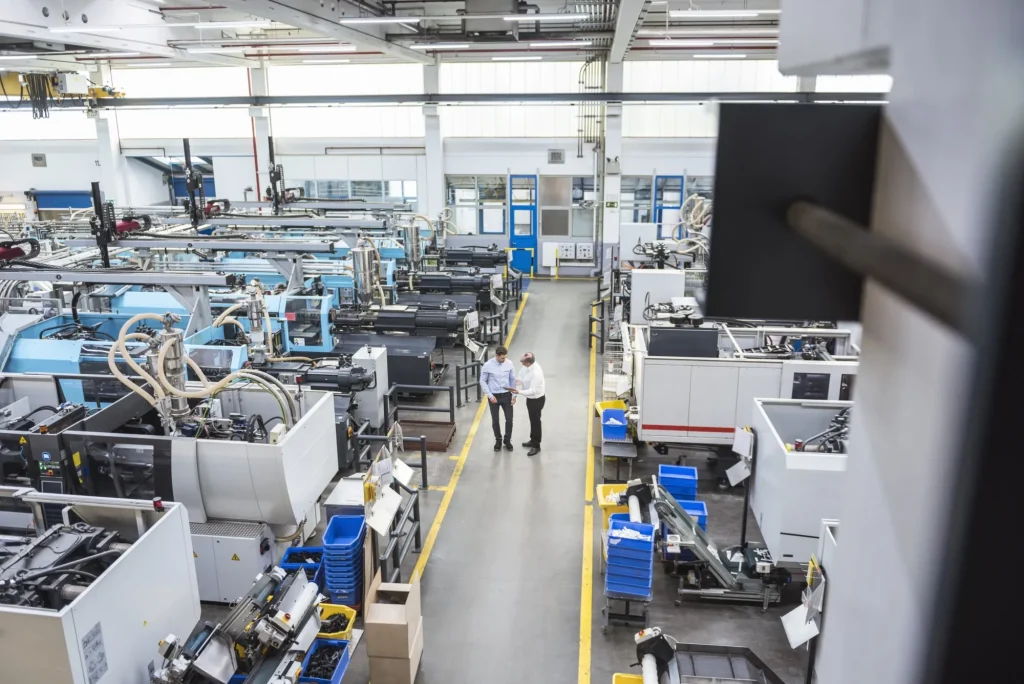
That is our idea for a dedicated TOOL ROOM PARTNERS.
CNC Machine
Under CNC Machines, Following are all the machines which are being used to create mould and dies (Tooling).
Advantages
Shorter Lead Times
When you perform in-house operations, you can significantly reduce lead times for producing products. Outsourcing often involves waiting for external suppliers, which can cause delays. In-house tooling allows you to engage in production on your own schedule, leading to faster turnaround times.
Cost Efficiency
While outsourcing might seem cost-effective initially, especially when offshoring to other countries, hidden costs such as shipping, and handling expenses can add up. In-house tooling eliminates the need for outsourcing outside of the country, saving money and hassle.
Quality Assurance
Easy Customizations
In-house tooling allows for easy customization of products. You can prototype, design, mold, and craft products within your own facility, tailoring them to specific requirements.
Reduced Risk
By keeping tooling in-house, you minimize the risk associated old, and craft products within your own facility, tailoring them to specific requirements.
with relying on external suppliers. Communication is streamlined, and any issues can be addressed promptly.
Increased Flexibility
In-house tooling provides flexibility to adapt to design modifications quickly.
Under CNC Machines, Following are all the machines which are being used to create mould and dies (Tooling).
VMC Machine
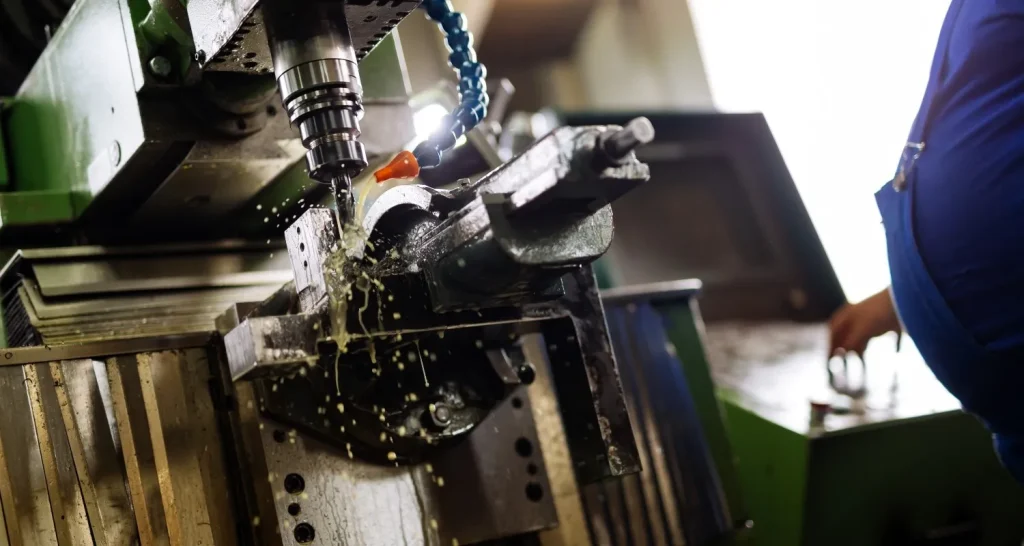
A Vertical Machining Center (VMC) is a type of milling machine characterized by its vertical spindle orientation. Unlike horizontal machining centers (HMCs), where the spindle is positioned horizontally, VMCs feature a vertically aligned spindle, allowing for easier access to the workpiece from above. These sophisticated machines play a pivotal role in modern manufacturing, empowering industries to craft intricate components with unparalleled accuracy and speed.
Basic Components and Working Principle
Vertical Spindle
The spindle in a VMC is oriented vertically, which simplifies tool access and workpiece handling.
Axes of Motion (X, Y, Z)
VMCs move along three primary axes: X (horizontal), Y (vertical), and Z (depth). This flexibility enables precise machining in multiple directions.
Tool Changer Mechanism
VMCs typically have automatic tool changers that allow seamless switching between different tools during machining.
Worktable and Fixturing
The worktable holds the workpiece securely, and fixturing ensures accurate positioning.
Control System (CNC)
VMCs are controlled by computer numerical control (CNC) systems, which execute programmed instructions for machining operations.
Types of VMC Machines
Standard Vertical Machining Centers
These machines come in various sizes and configurations. They can perform operations such as milling, drilling, boring, tapping, and thread cutting.
Multi-Axis Machining
Some VMCs offer 3, 4, or 5-axis capabilities, allowing complex machining tasks with greater flexibility.
Advantages
High Precision Machining
VMCs deliver precise results due to their rigid construction and accurate positioning.
Integration with Automation
VMCs can be integrated with automation technologies, enhancing productivity and reducing manual intervention.
Ease of Use
The control systems are user-friendly, making them accessible to operators and programmers.
Widespread Use
VMCs are widely used in various industries, including aerospace, automotive, and medical device manufacturing.
HMC Machine
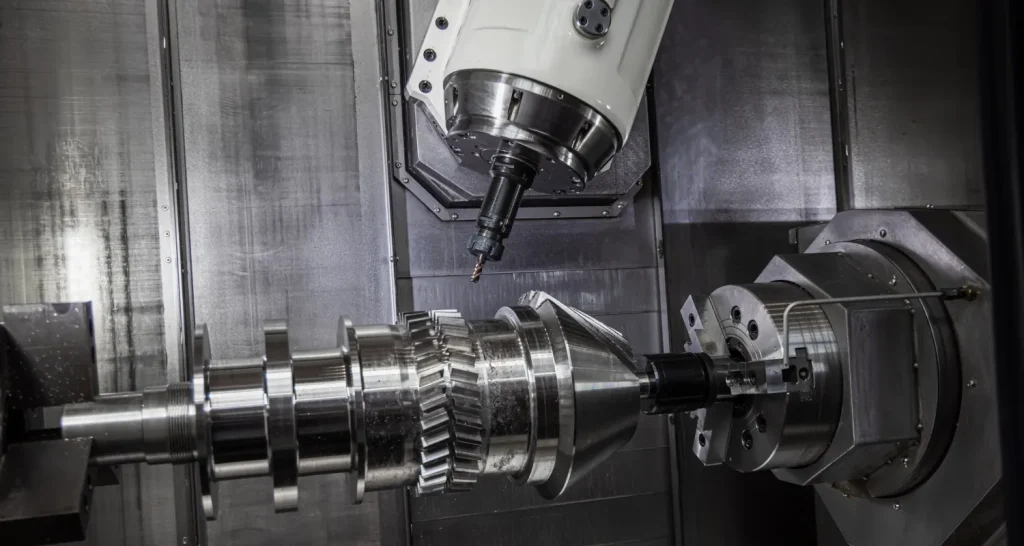
A Horizontal Machining Center (HMC) is a versatile and efficient drilling and milling machine that features a horizontal spindle orientation. Let’s delve into the details
Spindle Orientation
In an HMC, the spindle is positioned horizontally, parallel to the worktable and the floor. This arrangement allows the tool to extend out from the side of the tool holder, enabling machining across the side of the workpiece. As a result, chips fall away naturally, eliminating the need to clear them from the table.
Unlike vertical machining centers (VMCs), where the spindle is oriented vertically, HMCs offer distinct advantages due to their horizontal design.
Advantages
Uninterrupted Production
HMCs favor continuous production work. The horizontal spindle encourages chip evacuation, reducing downtime for chip removal.
Pallet Changers
HMCs often come equipped with two pallet changers. While machining occurs on one pallet, the next workpiece can be loaded on the other. This setup minimizes idle time and increases efficiency.
High-Speed Machining
HMCs achieve high spindle speeds, making them suitable for rapid material removal and precision machining.
Multi-Axis Capability
Multi-Axis Capability: Some HMCs offer 3, 4, or 5-axis machining, allowing complex operations and versatility.
Applications
- HMCs find applications in various industries, including automotive, aerospace, and general manufacturing.
- They excel in producing components such as engine blocks, transmission housings, and large structural parts.
Cost and Justification
The cost of an HMC varies based on specifications, features, and brand. Companies justify investing in HMCs due to their productivity gains, reduced cycle times, and improved part quality.
EDM Machine
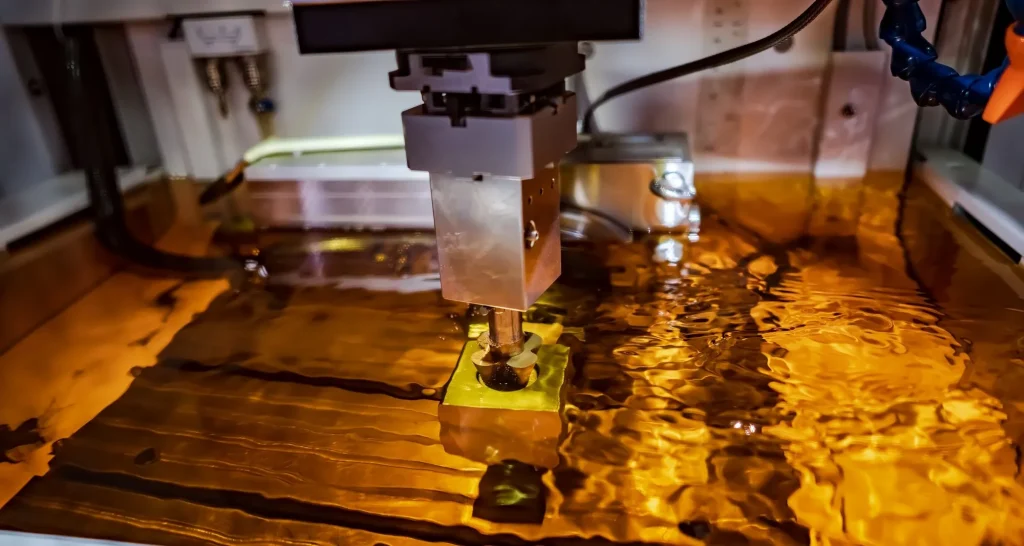
Electrical Discharge Machining (EDM), also known as spark machining, spark eroding, die sinking, wire burning, or wire erosion, is a non-traditional form of precision machining. Instead of using mechanical force, EDM utilizes thermal energy to remove material from a workpiece. Here’s how it works
Process Overview
- In EDM, a desired shape is obtained by using electrical discharges (sparks).
- Material removal occurs through a series of rapidly recurring current discharges between two electrodes.
- These electrodes are separated by a dielectric liquid and subject to an electric voltage.
- One electrode is the tool-electrode, while the other is the workpiece-electrode.
- The process relies on the tool and workpiece not making physical contact.
Dielectric Breakdown and Material Removal
- When the voltage between the electrodes increases, the electric field in the volume between them intensifies.
- This causes dielectric breakdown of the liquid, resulting in an electric arc.
- Material is removed from both electrodes during this process.
- After the current stops, new liquid dielectric is introduced to carry away solid particles (debris) and restore insulating properties.
- This replenishment of liquid dielectric is commonly referred to as flushing.
Materials and Applications
- EDM is particularly useful for machining hard materials that are challenging to process using conventional methods.
- Examples of materials suitable for EDM include carbides, ceramics, titanium alloys, and heat-treated tool steels.
- Applications range from prototype production to coinage die making and small hole drilling.
- EDM is also used in metal disintegration machining and closed-loop manufacturing
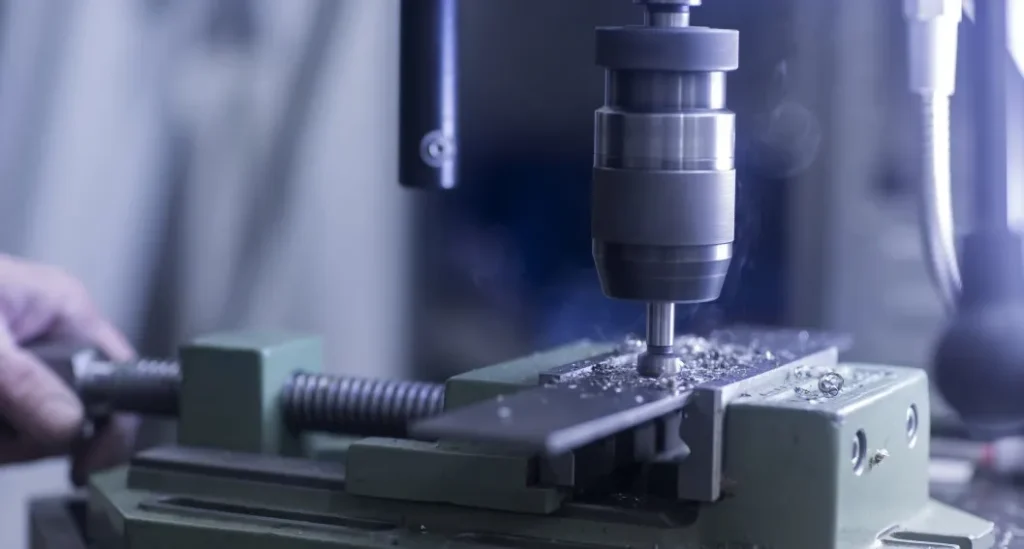
Drilling / Tapping Machine
Electrical Discharge Machining (EDM), also known as spark machining, spark eroding, die sinking, wire burning, or wire erosion, is a non-traditional form of precision machining. Instead of using mechanical force, EDM utilizes thermal energy to remove material from a workpiece. Here’s how it works
Drilling / Tapping Machine
Electrical Discharge Machining (EDM), also known as spark machining, spark eroding, die sinking, wire burning, or wire erosion, is a non-traditional form of precision machining. Instead of using mechanical force, EDM utilizes thermal energy to remove material from a workpiece. Here’s how it works
Lathe Machine
Lorem Ipsum is simply dummy text of the printing and typesetting industry. Lorem Ipsum has been the industry’s
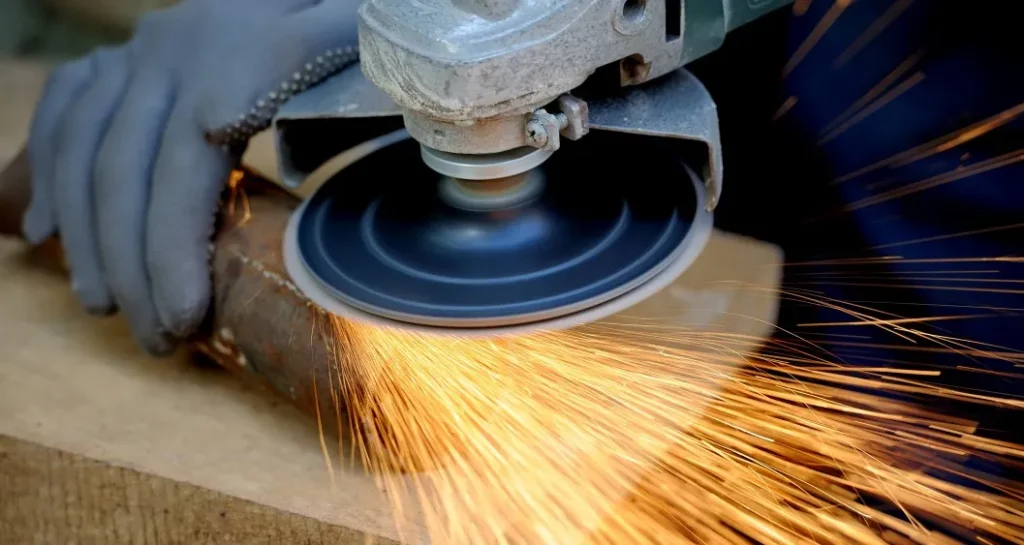
Surface grinders
Electrical Discharge Machining (EDM), also known as spark machining, spark eroding, die sinking, wire burning, or wire erosion, is a non-traditional form of precision machining. Instead of using mechanical force, EDM utilizes thermal energy to remove material from a workpiece. Here’s how it works
How we do it

Getting Started and Project Kick-off
As soon as a client requests a quote (RFQ), we get rolling VIA INDIGOS. We carefully study all the information provided such as sketches, DFX files, check plans, or actual samples, aiming to optimize everything from scratch. Our process is guided by the INDIGOS Quality Assurance Process (VIQAP), which ensures accurate and timely responses. Within a day, our sales team prepares for distribution based on rapid response and genuine care. We negotiate timelines, provide quotes, and set clear objectives for the construction process.

Design and Verification Stage
We conduct a Draft for Manufacturing (DFM) to identify critical checkpoints, ensuring the quality and accuracy of your product from the outset. This is part of the DFM VIA INDIGOS Quality Inspection Process (VIQIP), which is a guideline for quality manufacturing Once the customer approves our quote, we start turning ideas into real wins, requiring a purchase order and payment before we can seal the deal and burn our production skills.

Sample Creation and Approval
The manufacturing process begins when we build the prototype, deliver it to the approved DFM, followed by a series of tests under VIQIP to prove fidelity to VIA INDIGOS high standards The customer’s lamp quality green for the pattern keeps things moving. This is a thumbs up on quality and a clear sign that will keep you ahead in scaling and mass output.

Production and Quality Assurance
We keep a strict eye on completion dates, share open times and delivery dates for example, confirming that your go-to-market strategy is perfectly aligned with our product agility. Our Vendor Approval Process (VIVAP) ensures that our partners meet rigorous standards of quality and reliability. The Control then goes to our expert manufacturing team, who plan the production of the final product through accurate technical and quality analysis.

Delivery and Ongoing Partnership
As we reach the final stage of transforming your concept into reality, we are dedicated to not only meeting but exceeding your expectations. Our commitment is to build a partnership that ensures lasting satisfaction and success. Under VIQAP and VIQIP, we ensure consistently high standards after delivery. Additionally, our VIA INDIGOS JUST IN TIME (VIJIT) system can be used if selected by the customer to provide better inventory management. The journey does not stop when goods are delivered to customers. This is the beginning of a long-term contract of superior collaboration and partnership, where VIA INDIGOS is always ready to support, showcase and create new ideas for your ongoing manufacturing success.
Capablities
Aluminum Extrusion: Material Handled | Post Processing.